How to Host a Trunk or Treat: Ideas, Rules & Safety Tips for Organizers
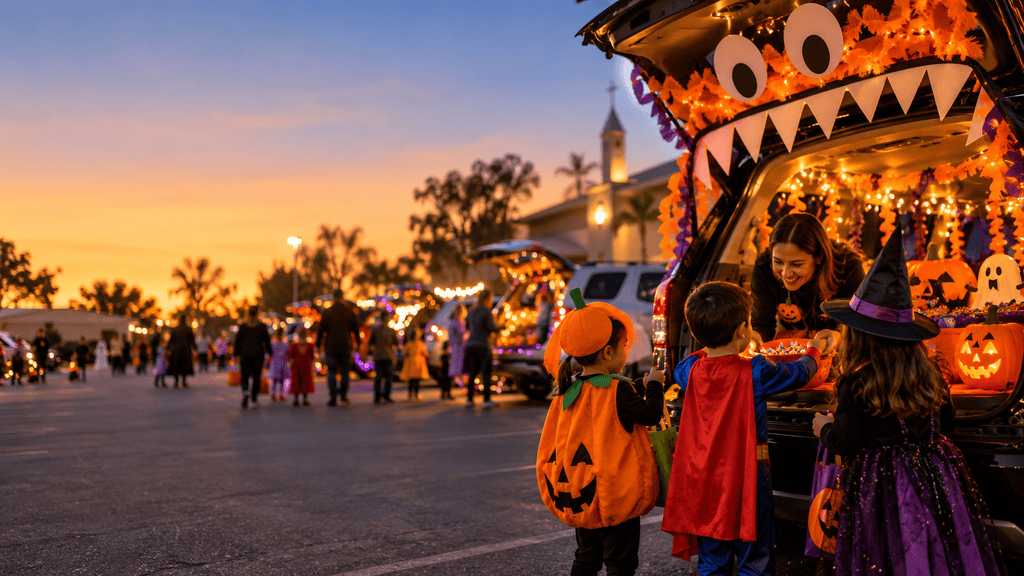
A trunk or treat turns a parking lot into a safe, walkable Halloween night. Families park, open their trunks, decorate them, and kids go car to car collecting candy. For churches, schools and community groups, it’s one of the easiest ways to welcome hundreds of families without a big budget.
But “easy” doesn’t mean “no planning.” The difference between a great trunk or treat and a chaotic one usually comes down to layout, sign-ups and a few clear rules. This guide walks you through all of it, plus decorating ideas to share with your trunk hosts.
What Is a Trunk or Treat?
A trunk or treat is a Halloween event where volunteers park cars in rows, decorate their open trunks and hand out candy to trick-or-treaters. It’s usually held in a church, school or community center parking lot on or just before Halloween.
Organizers like it because it’s:
- Safer than street trick-or-treating: no crossing roads in the dark, and every “house” is a known volunteer.
- Compact: little legs can hit 30 trunks in half an hour.
- Inclusive: it works for toddlers, kids with mobility needs and families new to the area.
- Cheap to run: trunk hosts bring their own candy and decorations.
How to Plan a Trunk or Treat Event, Step by Step
1. Pick your date, time and rain plan
Many groups hold their event on a weekend evening before Halloween so it doesn’t compete with neighborhood trick-or-treating. Start around dusk and plan for two hours; most families stay 45–60 minutes. Decide your rain plan now: move indoors to a gym or fellowship hall, or set a rain date.
2. Get permission and check insurance
If you’re using a lot you don’t own, get written permission. Check with your organization’s insurance provider about coverage for a public event. Some require a certificate or a simple event notice.
3. Recruit trunk hosts early
Aim for one trunk for every 15–20 expected kids. Open a sign-up form three to four weeks out, and ask each host for:
- Name and phone number
- Vehicle type (so you can plan the layout)
- Theme, if they have one (so you don’t get five pumpkin patches in a row)
- Any allergy-friendly treats they’ll offer
4. Map the layout
Draw the lot before you’re standing in it.
- Park in a U-shape or horseshoe so families walk one loop with no dead ends or backtracking.
- Point every car’s trunk in toward the walking path, with headlights facing out.
- Leave a fire lane open and keep one exit clear for emergency vehicles.
- Put registration at the entrance and snacks, games or a photo spot at the end of the loop to spread the crowd out.
5. Plan entry and check-in
A simple check-in table does three things: it counts attendance, it gives you a moment to welcome new families, and it’s the natural place to handle kid safety (more on that below). Free events can still use check-in. Just keep it fast, with a name, a headcount and a smile.
6. Staff it with volunteers
Beyond trunk hosts, you’ll need:
- 2–3 people at check-in
- 1–2 people in traffic or parking direction
- A first aid lead
- A “lost parent” station (it’s always the parent who’s lost, never the kid)
- Floaters to restock candy and answer questions
Make volunteers easy to spot. Matching shirts, safety vests or a custom lanyard with a role on it help families find help fast.
Trunk or Treat Rules to Share with Hosts and Families
Clear rules prevent most problems. Share them in your sign-up confirmation and post them at the entrance.
For trunk hosts
- Arrive 45–60 minutes early to park and decorate. Once the event starts, no cars move.
- Engines off for the whole event.
- Keep decorations family-friendly. Save the gore for the adult haunted house.
- Hand out only commercially wrapped candy.
- Mark allergy-safe treats with a teal pumpkin or sign.
- No open flames. Use battery candles and LED lights only.
For families
- Walk, don’t run, and stay on the walking path.
- Children under a certain age stay with an adult (set the age that fits your community).
- One piece of candy per trunk unless a host offers more.
- Costumes are welcome; masks should allow clear vision.
Keeping Kids Safe at Your Trunk or Treat
Hundreds of kids in costumes, in the dark, all looking the same from behind: safety planning is what parents will remember.
- Light the path. Rent or borrow light towers, or ask hosts to bring extra string lights. Dark gaps between cars are where trips and falls happen.
- Tag kids at check-in. Write a parent’s phone number on a wristband and put it on each child at the entrance. If a child gets separated, any volunteer can call the parent in seconds. Write-on Tyvek wristbands are inexpensive and tear-resistant, and they take a pen easily.
- Use one color for kids and another for adults. A second color on registered trunk hosts and volunteers lets anyone spot who belongs behind the cars.
- Set a meeting point. Announce a “if you get separated, go to ___” spot at check-in and mark it with a big sign.
- Control traffic. Block the lot entrance with cones once hosts are parked, and put a volunteer in a reflective vest at any spot where cars and walkers could meet.
- Have a first aid kit and a plan. Know who’s trained, where the kit is and the address to give 911.
Trunk or Treat Ideas for Decorating
Share these with your hosts. A few standout trunks make the whole event feel bigger.
Classic & easy
- Pumpkin patch: hay bale, pumpkins and a plaid blanket
- Spider web: stretchy web, giant spider and a “caught” stuffed animal
- Monster mouth: paper teeth around the trunk opening and a red fabric tongue
Movie & character themes
- Under the sea, with blue streamers and a cardboard submarine
- Superhero headquarters
- A candy land or board-game trunk
- A dinosaur dig with toy bones in a sandbox
Interactive trunks (these get the longest lines)
- Bean bag or ring toss for candy
- A “reach in the mystery box” (peeled grapes are eyeballs)
- A photo-op trunk with props
- A “guess the candy count” jar
Church trunk or treat ideas
- Noah’s Ark with stuffed animals two by two
- “Light of the World,” a trunk lit with lanterns and string lights
- David and Goliath with a cardboard giant
- A fall harvest theme with a verse on a chalkboard sign
Tip: run a “best trunk” contest with categories (spookiest, most creative, best group theme, kids’ choice). It’s the easiest way to get hosts to go all-out.
Add-Ons That Make Your Event Memorable
- Costume parade or contest at a set time, with a few category winners
- Hot cocoa and cider station (a great fundraiser)
- Face painting near the entrance while families wait
- A photo backdrop with your organization’s name on it, for free promotion every time a photo gets shared
- Glow sticks at check-in: kids love them, and they make children visible in the dark
Trunk or Treat Planning Checklist
4 weeks out
- Set date, time and rain plan
- Get lot permission and check insurance
- Open trunk host sign-ups
- Start promoting (church bulletin, school folders, social media, community boards)
2 weeks out
- Close sign-ups and draw the parking map
- Recruit check-in, traffic and first aid volunteers
- Order supplies: wristbands, signage, glow sticks, cones, lighting
Week of
- Email hosts the rules, arrival time and their parking spot
- Send volunteers their roles and shift times
- Print a map and signs for the entrance, meeting point and restrooms
Day of
- Hosts arrive 45–60 minutes early to park and decorate
- Volunteer huddle 30 minutes before start
- Block the lot entrance once hosts are parked
- Walk the loop in the dark before opening and fix any unlit spots
What You’ll Need
A well-run trunk or treat is mostly about people knowing where to go and who’s who. Arnett Credentials helps with the essentials:
- Write-on Tyvek wristbands for kid ID and color-coded check-in
- Custom lanyards so volunteers and trunk hosts are easy to spot
- Event wristbands printed with your church or school name, as a keepsake families take home
Order early in October so supplies arrive before your event. Request a quote
Related Posts