Motorsport Credentials: Every Pass, Badge & Wristband a Race Weekend Actually Needs

A race weekend is basically a small city that assembles on Thursday and vanishes on Sunday night. It’s got residents (the teams), a downtown (the paddock), a nightlife district (hospitality), traffic problems (always), and a few thousand people who all believe, deep in their hearts, that they belong wherever they’re currently standing.
The only thing keeping that city from descending into a very expensive free-for-all is a pile of laminated rectangles, fabric straps, and wristbands. Individually they look like nothing. Collectively, they’re the entire access-control system — the difference between “authorized crew” and “guy who followed someone through a gate looking confident.”
So let’s actually explain the whole system: every motorsport credential a race weekend needs, what each one does, and who should be holding it. No jargon, no fluff, and only a normal amount of jokes.
What Are Motorsport Credentials, Exactly?
Motorsport credentials are the badges, passes, lanyards, wristbands, and vehicle permits a race event uses to control who gets into which zone — pit lane, paddock, media center, hospitality, and everything in between. Each credential is tied to an access level and a role, so that at a glance, anyone can tell whether the person walking into the garage is a crew chief or a lost fan holding a very optimistic ticket.
That’s the boring-but-important definition. Now the fun part: the actual gear.
The Pass Itself: Pit, Paddock & the Rest of the Alphabet
The pass is the star of the show — the printed credential that says who you are and where you’re allowed. Everything else on this list exists to hold it, scan it, or match it. These are your custom event badges and passes, and they usually come in three flavors:
- Laminated passes — the workhorse. A printed credential sealed in laminate so it survives rain, fuel, sunscreen fingerprints, and being worn for four straight days. Most pit and paddock credentials live here.
- PVC hard cards — thicker, more premium, harder to fake. Good for season-long credentials that need to look sharp in October the same way they did in March.
- Metal Badges — the flex tier. Aluminum or stainless, laser-engraved, effectively weatherproof. These go to officials, team principals, series staff, and the sponsor who is definitely going to keep it as a souvenir.
Access-wise, this is where the hierarchy lives:
- Pit pass — the working pit lane and hot zones. The most restricted credential you’ll issue, and the one people try hardest to talk their way into.
- Paddock pass — garages, transporters, team hospitality. Close to the action, without handing over the keys.
- Media — press areas, photo positions, the media center’s questionable coffee.
- VIP / Hospitality — the good chairs and the good food, usually with a paddock-adjacent view.
Pro move: run each tier as a different color with different security markings, so a marshal can read access from ten feet without squinting at fine print.
The Lanyard: The Unsung Hero Around Everyone’s Neck
Nobody thinks about the lanyard until it snaps and a $200 credential goes skidding under a transporter. A motorsport lanyard isn’t just a strap with a logo — it’s the thing keeping the pass visible, secure, and attached to a human all weekend.
The details that matter:
- Metal clips and badge holders that actually lock, instead of getting the badge onto the tarmac at the first gust.
- Breakaway closures — a genuine safety feature around tools, tires, and fast-moving crew. A lanyard that doesn’t let go near machinery is a bad lanyard.
- Dye-sub or woven straps in team colors, because sponsors paid for that real estate and they’d like to see it.
It’s a small thing that quietly does a big job — which is basically the lanyard’s entire personality.
Wristbands: For When You’re Counting Heads, Not Names
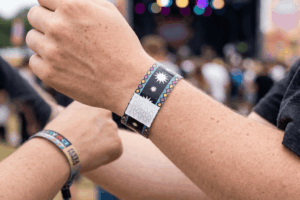
Once you’re past the “everyone has a specific role” crowd and into the “a few thousand fans, campers, and hospitality guests” crowd, badges stop making sense and wristbands take over. They’re fast, cheap at volume, and hard to pass off to your buddy at the gate.
- Tyvek — single-day, high-volume, delightfully cheap. Perfect for general admission and “we sold more tickets than expected.”
- Cloth — comfier and tougher for multi-day wear, ideal for crew camping and season regulars who’d rather not re-band every morning.
- RFID — the smart tier (more on that below).
If badges are for the people you know by name, wristbands are for the people you’re counting by the thousand.
Parking Passes: Because Cars Need Credentials Too
Every credential system eventually runs into the same question: okay, but where does the truck go? Parking passes and vehicle permits are the credentials nobody brags about and everybody needs — mirror hang tags, windshield decals, and dashboard passes that keep haulers, chase trucks, and VIP cars in the right lots and out of the wrong ones.
Color-code them by zone (paddock, infield, VIP, staff) and you’ve quietly solved about 80% of your gate-traffic arguments before they start.
Role Flags & Tags: Reading the Room at Ten Feet
In a busy pit box, nobody has time to read a name badge. That’s what lanyard flags and role tags are for — quick visual markers that say Fuel, Fire, Engineer, Spotter, or Team Manager at a glance. They’re small, cheap, and shockingly effective at keeping the right person in the right spot during the ninety seconds when it actually matters.
RFID & Hard Cards: The Credential That Also Does Math
Sometimes a printed pass isn’t enough and you want the credential to do something. RFID and NFC chips embed right into badges, hard cards, and wristbands for contactless scanning at gates, re-entry tracking, and — at bigger events — cashless payments and real-time headcounts.
The catch worth knowing: the tech lives in the credential, not the lanyard. So “RFID lanyard” really means “normal lanyard holding an RFID badge.” Now you know, and you can be smug about it.
A Cheat Sheet: Who Gets What
| Credential | Who carries it | What it opens | Usual format |
|---|---|---|---|
| Pit pass | Working crew, officials | Pit lane, hot zones | Laminate / hard card |
| Paddock pass | Teams, media, guests | Garages, transporters, hospitality | Laminate |
| Media | Press, photographers | Media center, photo positions | Laminate + RFID |
| VIP / Hospitality | Sponsors, guests | Suites, hospitality, paddock view | Metal / hard card |
| Crew / Grid | Pit crew, engineers | Grid, garage, working areas | Laminate + role flag |
| General admission | Fans | Grandstands, public areas | Wristband |
| Vehicle | Haulers, VIP cars | Paddock / infield lots | Hang tag / decal |
How to Not Screw This Up
A few things that separate the smooth weekends from the 6 a.m.-gate-meltdown weekends:
- Map credentials to zones first, artwork second. Decide who goes where, then design. Pretty badges that don’t match your access plan are just expensive confetti.
- Use variable data — names, teams, car numbers, day, zone, sequential numbering. It makes every pass traceable to a person, which security will thank you for.
- Order the whole season in one run for a multi-round series, so round six matches round one and your reorder budget doesn’t spiral.
- Match your colors — PMS matching keeps team liveries and sponsor marks consistent across lanyards, badges, and parking passes so it all looks like one system.
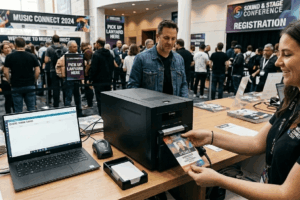
- Keep a safety net for gate additions. Even a perfect pre-order meets someone who registered “five minutes ago” — that’s what on-site badge printing is for.
Frequently Asked Questions
How many credential types does a race event actually need?
Most events run somewhere between four and seven: pit, paddock, media, VIP, crew, general admission, and vehicle. Smaller events collapse a few together; big multi-day events split them further. The rule of thumb — if two groups shouldn’t stand in the same place, they shouldn’t share a credential.
Who decides who gets what?
You do — usually the event organizer, series, or track, sometimes with security. The credential company’s job is to turn your access plan into printed reality, not to guess it.
Do small grassroots events really need all this?
Not the whole catalog. A weekly short-track program might only need pit sign-in credentials and fan wristbands. The system scales down cleanly — the point is that the logic stays the same even when the scale doesn’t.
What’s the most-abused credential?
The paddock pass, hands down. It feels like all-access, so it collects the most “my friend said I could borrow it” energy. Sequential numbering and clear color-coding keep it honest.
Final Thoughts
Motorsport credentials aren’t glamorous. Nobody’s putting a laminate pass on the podium. But get the system right and the whole weekend just… works — the right people in the right zones, fast, with no arguments at the gate. Get it wrong and you’re the one explaining to a sponsor’s VIP why they can’t stand in a live pit box.
If you’re planning a race weekend and want the whole credential system — passes, lanyards, wristbands, and parking — built to match and built to survive gate-to-grid, we can help. Request a sample pack to feel the materials yourself, or get a quote and we’ll help you map it out. No confidently-wrong ticket-holders required.
Related Posts